

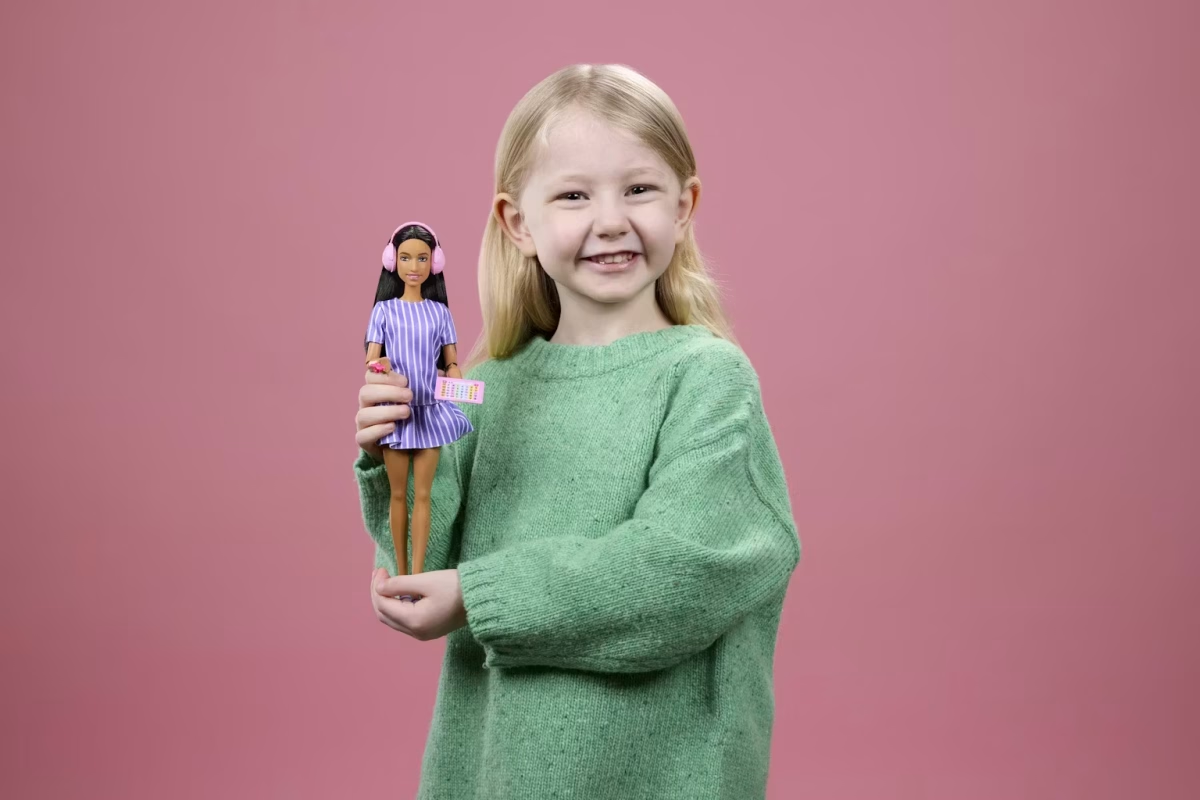
An estimated one in 31 kids in the U.S. has autism. With that knowledge, Mattel has made its first-ever doll with autism. Some people may think this is too “woke” or “unnecessary,” but many children diagnosed with autism go most of their childhood or even their whole adult life feeling different or unseen. There is a large lack of autistic representation in the media, and many movies or shows that do include an autistic character are extremely stereotyped.
For the creation of this doll, Mattel collaborated with the Autistic Self-Advocacy charity to create a doll that children could connect with and look up to. You might wonder: how can a doll be autistic? Well, obviously, it can’t just overtly be autistic simply because of the label on the Barbie box; no, the doll has multiple attributes that someone with autism might reflect. At first glance, Barbie is wearing a purple striped flowy dress and purple shoes, which alludes to the fact that many people with autism may have a favorite color that they find comfort in and brings them a sense of familiarity. For example, @Lewisempire6 is a TikTok account for autism awareness which features a family that lives with a teen girl with autism, Presley, , who loves the color purple. Upon receiving this doll, she was overjoyed with the color coordination of the new Barbie and how it was also her favorite color.
The doll also comes with a set of noise-canceling headphones, which are used by many children with autism, as it reduces the chance of overstimulation and helps them navigate loud or overcrowded spaces. In each hand, the doll holds common tools that an autistic person might use. A fidget spinner in one for sensory regulation, stress reduction and overall focus. In the other hand, a tablet with communicative symbols is used to make expressing herself easier and to help foster independence, as some kids and adults with autism are nonverbal and use a tool like this to communicate on a daily basis.
The doll goes even deeper into detail, as even the focus of her eyes is slightly to the side, mimicking how some autistic people prefer to avoid eye contact, as it tends to make them uncomfortable. Not only that, the joints on the doll allow you to position the doll as if she were stimming. However, one problem that some people might have with Mattel’s Barbie is that no doll can truly encapsulate every person on the spectrum, so not everyone can fully relate to this Barbie as there is no singular look or characteristic that all autistic people have. Even with that in mind, Mattel’s overall goal is to give kids a toy that they feel represents them so they can feel noticed and appreciated in a world where they might feel like an afterthought.